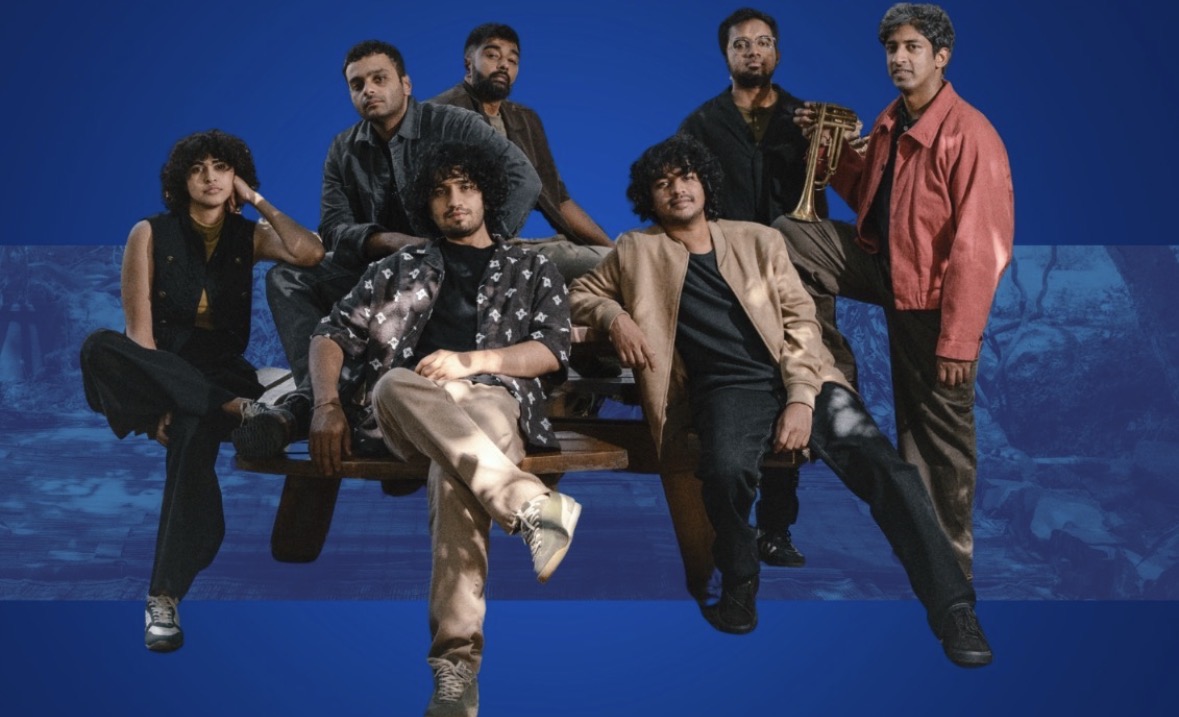
In a music landscape often driven by trends, Easy Wanderlings have carved a space that feels timeless. Blending indie folk, ambient textures, and heartfelt storytelling, the Pune-based collective has built a loyal following with music that invites listeners to slow down and connect. Their sound is intimate yet expansive, drawing inspiration from nature, travel, and everyday emotions. As they continue to evolve with new music and live performances, the band remains committed to authenticity over convention.
In this exclusive conversation with The Score Magazine, Easy Wanderlings reflect on their creative journey, the stories behind their music, and what lies ahead for one of India’s most distinctive independent acts.
1. Ten years is a huge milestone for an independent band. Looking back, what is one moment that made you feel, “We’ve truly built something that will last”?
Sanyanth:
Sanyanth (Founder, composer,songwriter): I don’t think I ever let myself carry the weight of whether the band will last or not. I believed in the music we made and I’m grateful that it’s been strong enough to keep bringing us back to one another for all these years.
Truth is, we really don’t know for how long things are meant to last. I take it by the day and be grateful that we’re still making music together, growing up together and sharing beautiful priceless moments on and off stage.
Sharad (guitarist): I didn’t think of it then, but in hindsight it is our debut album. The parts of the globe it reached and the places that it took us, truly was the foundation of everything we’ve done since its release. The title ‘As written in the stars’ sincerely motivates us till date to believe that this was meant to be. And continues to drive us to spread our music far and wide.
Malay (Bassist, co-founder): There have been quite a few moments, but landing our first NH7 Weekender gig was definitely one of the biggest. We were basically three people fresh out of college, suddenly getting the opportunity to play on a stage that so many independent musicians dream of. Around that time, people from different parts of the world were reaching out to us and asking us to come and play in their cities and countries. It was quite surreal.
But I think what has really made me believe that this will last is the fact that, even after ten years, we always find our way back to each other. Everyone is busy, everyone has their own life, but somehow we find the time for gigs, rehearsals and making music. It has almost become a ritual.
For me, lasting simply means that we still enjoy doing this together. There will always be ups and downs, but when I am on stage, I know that if something goes wrong, someone in the band has my back. We are a unit, and I think that friendship, trust and the fact that we still genuinely have fun together is what has kept us going.
2. Easy Wanderlings has always had a signature sound that’s calm, cinematic, and deeply emotional. How have you managed to evolve over the years without losing that identity?
Sanyanth (composer,songwriter): That came easy. We didn’t try to be someone else. We made music that felt natural to us. The core of how we saw the world and wrote music through these observations remains the same. We’ve explored different genres that we enjoy, be it funk, soul, indie folk and soft rock, but there is a certain thread that ties everything back to the Easy Wanderlings sound.
Sharad(guitarist): Honestly it’s in the songs, right from the start I remember us talking about how we don’t want to be boxed in to any one genre while maintaining an “Easy Wanderlings” sound. I think the one thing the one thing that stays common in all our songs is that the lyrics are heart felt, introspective, and mostly observing the human condition. That and what we consider strong melody. With those two intact we were able to jump genres and develop our sound within roots music (folk, blues, soul, funk, rock, jazz, etc.).
Malay:
I don’t think we have ever consciously tried to protect a particular Easy Wanderlings sound. The sound has naturally evolved because we have evolved.
When we started, we were more in the singer-songwriter and indie-folk space. Over time, we started experimenting with different instruments, arrangements, recording techniques and ways of playing. A band’s sound is shaped by so many things… the vocalists, the guitars, the musicians, the microphones, the way something is recorded and the way each person interprets a song.
The songwriting has also evolved because we have evolved as people. Ten years ago, life was different. Maybe the songs were happier because there was less stress and fewer responsibilities. Today, our experiences are different, and naturally the music reflects that. We are talking about the world around us, personal struggles and the ups and downs of life.
But if there is one thing that has remained constant, it is the melody and the songwriting. You should be able to strip an Easy Wanderlings song down completely, play it acoustically, and the song should still hold up. For us, that is where the identity really lies.
3. Your music often feels like a conversation rather than a performance. How does songwriting usually begin for the band? Is it a lyric, a melody, or simply a feeling?
Sanyanth: I write down my thoughts in a separate notepad. I have my melodies saved in another folder.
When I feel like there’s a strong melody shaping up I go back through those notes and see what naturally belongs with it. I’m never trying to force words onto a tune. I’m looking for thoughts that already carry the same emotion. When those two things find each other, that’s usually where the song begins.
4. With multiple vocalists and musicians, how do creative disagreements shape your music? Has any disagreement unexpectedly led to one of your best songs?
Nitin( Keyboardist, Producer): Over time, we’ve learned not to dismiss ideas too quickly. Creative disagreements often encourage us to explore approaches we might not have considered otherwise.
Sanyanth: Creative disagreements occur all the time. The good news is that no amount of these disagreements has affected anyone’s ego till now. We know that we’re doing this for the music and the song is above all of us. We try out as many ideas from each member and see what feels better unanimously and take the hard call and live with it. You know what they say, sometimes we win, sometimes we learn.
5. The independent music ecosystem has changed dramatically over the last decade. What has been the biggest positive shift, and what challenge still remains?
Sanyanth: A positive change is that it is easier to make, record and release music for anyone these days. More people are listening to and appreciating independent music. There are more avenues to perform your music and showcase to a wider audience. It has become easier to collaborate with artists across the world. Bad news is the rapid increase in Ai generated music, it takes away the fun, the craftsmanship and the journey behind the creation.
Malay: The independent music ecosystem has changed tremendously. The biggest positive shift has definitely been accessibility. When we started, home studios and digital music-making were still evolving. Today, even a fifth- or seventh-grader can have access to the tools and knowledge needed to create and release a song. That is incredible. Social media and streaming have completely changed how music is discovered. But at the same time, there is now so much music competing for attention. Making great music and making sure that music reaches enough people are two completely different things. For us, that is something we know we need to work on. We know the music connects with people when they hear it live or listen to the recordings, but we need to take our digital game a few notches higher so that it reaches more people. The live ecosystem has improved and festival experiences have become much better, but venues still keep coming and going. And realistically, building a financially sustainable career as an independent musician in India without becoming completely mainstream is still extremely difficult. Most musicians need another primary profession while music remains the passion project.
That is a narrative we would genuinely like to change. We are also trying to figure out whether an independent band can be treated like a sustainable business without compromising the music. We don’t have all the answers yet, but that is something we want to explore.
Nitin (Keyboardist, Producer): The biggest positive shift has been the growing curiosity among listeners. People are actively seeking out new music, and in the process they’re constantly discovering smaller independent artists. Whether the music ultimately resonates with them is subjective, but what’s encouraging is how open-minded listeners have become—they’re increasingly willing to give something new a chance.
6. Your audience has grown alongside you over the years. Has there ever been a fan story or interaction that reminded you why you started making music?
Sanyanth: Our fans are the best. I can’t think of one story in particular, but over the years, I’ve realised that our fans are some of the kindest people we’ve met. They’ve hosted us in their homes, not just across India, but even during our UK tour. They’ve shown up to concerts year after year, bought our merch, lent us instruments when we needed them, made beautiful artwork inspired by our songs, and sung every word back to us. They’ve helped our music travel farther than we ever could have on our own.
Nitin:
We’ve been approached countless times in person, and we regularly receive heartfelt messages on Instagram from people telling us how our music has been with them through some of the hardest and happiest moments of their lives. As musicians, there’s nothing more rewarding than knowing your work has had that kind of impact on someone.
7. If you had to describe each chapter of Easy Wanderlings’ ten year journey in just one word, what would those ten years look like?
Siya (Flutist) – Becoming.
Every year has been a chapter of becoming: becoming better musicians, better collaborators, and better people. We’ve grown with and around each other, seen one another through so many phases of life, and when I look back, it all plays like this sepia-toned film filled with warmth and gratitude. It’s difficult to put into words, but it’s a feeling I’ll always carry with me.
8. After ten years together, what has surprised you the most about each other as musicians and as people?
Shardul: It surprises how different all of us are and yet how close have managed to be for such a long time. We have believed in the same vision with conviction for all these years and continue doing so without the slightest bit of doubt. What started off as a college band is now a core part of each of our identities and we have all become an indelible part of each others’ life.
9. Many artists talk about chasing numbers today. Easy Wanderlings has always seemed to prioritize connection over virality. Has that philosophy become harder or easier to maintain?
Shardul (Violinist): I feel like the answer to this question lies beyond a binary connection vs virality spectrum. Being true to ourselves as musicians and making music that we feel strongly about is our primary area of focus. We write about issues and experiences that mean something to us, we write melodies that we identify with and put it out as an expression of our worldview and just hope there’s others out there who would maybe relate to what we have to say and the way we say it.
Abraham (Drummer) : We are also chasing numbers and vitality. That’s just the nature of the music scene. If we can do that while keeping our authenticity then great.
Sharad (Guitarist): Yes, I think it has become harder to maintain more than ever before. But it makes it so much more important to keep believing in that philosophy. We may have only a few thousand followers on different social media platforms, but the dedicated fan base we’ve built has been organic through multiple national tours, radio play, and the power of a good/ relatable song.
10. As you celebrate ten years, what kind of legacy do you hope Easy Wanderlings leaves behind for the next generation of independent artists?
Siya (Flutist) : I hope Easy Wanderlings leaves behind the belief that you should never be afraid to experiment. When we started, we were one of the few independent bands building songs around instruments like the violin, flute, piano, clarinet, and brass sections. We were an eight-piece ensemble, which wasn’t always the easiest setup to tour with, but it gave our music a richness and texture that became part of our identity.
If there’s one legacy I’d love for Easy Wanderlings to leave, it’s this: Your sound evolves with time, with the people you create with, and with the experiences you absorb from the world around you. Every band member brings something unique that shapes the music in ways you could never do alone. Genuinely love the music you’re making, and never stop evolving.
Pratika (Vocalist) – Be true to the music and make decisions to serve the music. That will always connect with people more than searching for virality